57 kzone

  • Subscribe to our RSS feed.
  • Twitter
  • StumbleUpon
  • Reddit
  • Facebook
  • Digg

Friday, 4 November 2011

Doug McGuff - video library

Posted on 14:54 by Unknown


http://www.bodybyscience.net/home.html/?page_id=2
--------------------------------------------------------------------------
 DOUG McGUFF- video library
--------------------------------------------------------------------------


DOUG McGUFF INTERVIEW

Dr. McGuff was in Indianapolis to speak at high-intensity trainer Bo Railey’s facility (Exercise Inc.). Just prior to Doug’s talk, he sat down with Bo for an interview on Body By Science. Here is the link to this interview:

www.youtube.com/watch?v=ahIKTdJaXPE


DOUG McGUFF ON FOX TV

During his recent trip to Indianapolis, Dr. McGuff was interviewed on Fox TV. Here is the video from that interview:

http://www.youtube.com/watch?v=1FrP5k2_B9Q


DR. McGUFF “BODY BY SCIENCE” TV SEGMENT

Dr. McGuff was in Texas at Hugh Hines’ Precision Exercise facility.  The local news crew dropped by for a profile. Here is the link to it:

http://www.youtube.com/watch?v=WxCTv99LC5M


BODY BY SCIENCE — VIDEO 1 (COMMON THINKING ERRORS ABOUT FITNESS & HEALTH)
Recently Dr. McGuff gave a brief seminar about the content in our book Body By Science at a book signing that happened to be recorded on video tape. I’m going to post this seminar as a series, covering different topics covered in the book ranging from “cardio” to “Whom Can You Trust?”

http://www.youtube.com/watch?v=y-ufSYBcZa0


BODY BY SCIENCE (VIDEO 2): WHAT ARE “HEALTH” & “FITNESS?”
I have just added Part Two of Dr. McGuff’s lecture on Body By Science in which Doug provides an overview of Chapter One. The central theme being what exactly are “health” and “fitness” and why they are not necessarily intrinsically linked. Here is the link to Part Two:

http://www.youtube.com/watch?v=0NxnywlDOb0


BODY BY SCIENCE (VIDEO 3): “CARDIO”
In this excerpt, Dr. McGuff explores the true nature of cardiovascular exercise during a seminar he gave at a recent book signing. The realities of “anaerobic” and “aerobic” pathways and his concept of “Global Metabolic Conditioning” (the touchstones of Chapter Two) are examined in detail. Here is the link to Part Three:

http://www.youtube.com/watch?v=RiHhc7eLpQY


BODY BY SCIENCE (VIDEO 4): THE DOSE-RESPONSE RELATIONSHIP OF EXERCISE
In this video (taken from a recent lecture Dr. McGuff gave at a book store), Doug speaks about Chapter 3 of our book Body By Science, in which he details the Dose-Response relationship of exercise. Along the way he touches on the content of other chapters such as Enhancing The Body’s Response To Exercise (Chapter 6) and Tweaking The Exercise Stimulus (Chapter 7). Here is the link to this video:

http://www.youtube.com/watch?v=FUaJxsLBaHY


BODY BY SCIENCE (VIDEO 5): THE SCIENCE OF FAT LOSS
This is a two-part video that contains Dr. McGuff’s presentation of some of the key points of Chapter 9 of Body By Science. This is an excellent summary of the actual science underlying how human beings lose body fat and the role of high-intensity exercise in optimizing the fat loss process. Here are the links:


The Science Of Fat Loss (Part 1): http://www.youtube.com/watch?v=MzA-E8zb-Ds

The Science Of Fat Loss (Part 2): http://www.youtube.com/watch?v=ToGt_GYCUmY


BODY BY SCIENCE (VIDEO 6): CONSIDERATIONS FOR ATHLETES AND SENIORS

In this segment, Dr. McGuff explains the proper role of strength training for athletes and contrasts it with skill training (an important distinction that we cover in great depth in Body By Science). In addition, he elucidates the supreme importance of strength training for seniors, revealing how it enhances both health and (to an amazing extent) functional ability. Here is the link:

http://www.youtube.com/watch?v=LSGCcjCjAlk


BODY BY SCIENCE (VIDEO 7): THE “BIG FIVE” WORKOUT

In this video Dr. McGuff provides an overview of Chapter 4 of Body By Science, which details the “Big 5″ workout. He covers such topics as exercise selection, aggressive fatiguing of muscle, why multiple sets aren’t required, and the tremendous importance of recovery in between workouts. The link to the video is:
http://www.youtube.com/watch?v=5eNBTZiZnLY


BODY BY SCIENCE (VIDEO 8): DEALING WITH SPECIAL NEEDS

In this latest installment of our Body By Science video series, Dr. McGuff discusses the importance of strength for people with range of motion limitations and why only slight modifications and adjustments (primarily equipment modifications) need to be employed. Here is the link to this video:

http://www.youtube.com/watch?v=x1L9GamP2dA


BODY BY SCIENCE VIDEO 9 (BENEFITS OF STRENGTH)

In this installment of the Body By Science video series, Dr. McGuff explains some of the benefits of proper strength training as it pertains to enhanced functional ability and even longevity. In addition, he relates how and why proper high-intensity strength training might not be for everyone. Here is the link to the new video:

http://www.youtube.com/watch?v=qfnPRM3iYVA


BODY BY SCIENCE (VIDEO 10): THE BIG 5 WORKOUT (Part 1)
In this installment of our Body By Science video series, Dr. Doug McGuff explains the principles and exercises within the “Big 5″ Workout. Here is Part One of this 4-part series:

http://www.youtube.com/watch?v=Txsd0rIsPR4


BODY BY SCIENCE (VIDEO 10): THE BIG 5 WORKOUT — Part 2
In this installment of “The Big 5″ Workout series, Dr. Doug McGuff demonstrates the exercises and protocol involved in this basic workout. Here is the link to this video:

http://www.youtube.com/watch?v=USyj-RgHFl0


BODY BY SCIENCE (VIDEO 10): THE BIG 5 WORKOUT — PART 3
In this third installment of the “Big 5″ Workout series, Dr. Doug McGuff is shown demonstrating the remaining exercises of the “Big 5″ workout as detailed in Body By Science. Here is the link to this video:

http://www.youtube.com/watch?v=_tI4bOiSAaQ


BODY BY SCIENCE (VIDEO 10): THE BIG 5 WORKOUT — Part 4
In this installment (Part 4 of 4), Dr. Doug McGuff discusses the metabolic effects of the “Big 5″ Workout as detailed in “Body By Science.” Here is the link to Part Three:

http://www.youtube.com/watch?v=gnDRtLyBFdg


BODY BY SCIENCE (VIDEO 11): WENDY McGUFF’S BIG 4 WORKOUT (Part 1)
Ever since Wendy posted her WOWs on our blog, we have had a huge demand from our women readers for more information on how Wendy trains. In this installment in the Body By Science video series, Wendy McGuff demonstrates her “Big 4″ Workout that she performs once every 14 days following the principles espoused in the bookBody By Science. This is Part One of a two-part series. Here is the link to this video:

http://www.youtube.com/watch?v=JUBa1T_y8SU


BODY BY SCIENCE (VIDEO 11): WENDY McGUFF’S “BIG 4″ WORKOUT — Part 2
As promised, here is the conclusion of Wendy McGuff’s “Big 4″ workout that she performs once every 14 days, adhering to the principles found in the book Body By Science. Here is the link to this video:

http://www.youtube.com/watch?v=W2djxhCQWq0


BODY BY SCIENCE (VIDEO 12): INSIDE ULTIMATE EXERCISE — Part 1
In Part One of this four-part video series, Dr. Doug McGuff takes the viewer on a tour of his personal training facility (Ultimate Exercise, in Seneca, South Carolina), revealing the equipment he employs in training his clients with the methods detailed in Body By Science. Here is the link to Part One:

http://www.youtube.com/watch?v=gYABzPgcBbQ


BODY BY SCIENCE (VIDEO 12): INSIDE ULTIMATE EXERCISE - Part 2
In Part Two of this inside look at Ultimate Exercise, Dr. Doug McGuff continues his tour of his facility, explaining the intricacies of the equipment he employs in the training of his clients —Body By Science style. Here is the link to Part Two:

http://www.youtube.com/watch?v=D6_99fPkN0U


BODY BY SCIENCE (VIDEO 12): INSIDE ULTIMATE EXERCISE - Part 3
In this installment, Dr. Doug McGuff continues his tour of Ultimate Exercise, his personal training facility in South Carolina. This is Part 3 of a four part series. Here is the link to this video:

http://www.youtube.com/watch?v=9HR155f4op4


BODY BY SCIENCE (VIDEO 12): INSIDE ULTIMATE EXERCISE - Part 4
This is the concluding segment of Dr. Doug McGuff’s tour of his personal training facility in South Carolina. Here is the link:

http://www.youtube.com/watch?v=FhpfLcam-rw


DR. Doug McGUFF “BODY BY SCIENCE” PRESENTATION — Part One
This is Part One of a talk Dr. Doug McGuff recently delivered on the reasons why he and John wrote Body By Science, in which Doug touches on certain fallacies in exercise and the need for a science based approach. Here is the link to Part One of this presentation:

http://www.youtube.com/watch?v=U9cDm1tRyR0


DR. DOUG McGUFF’S “BODY BY SCIENCE” PRESENTATION - Part Two
In Part Two of Dr. Doug McGuff’s Body By Science presentation, Doug takes a hard and critical look at what exactly constitutes “Health” and “Fitness.” Here is the link to Part Two of this presentation:

http://www.youtube.com/watch?v=E3nt6XPhEZw


DOUG McGUFF’S “BODY BY SCIENCE” PRESENTATION — PART THREE
In this installment of Dr. McGuff’s Body By Science Presentation, Dr. McGuff discusses the type of workout required to stimulate the body to produce the type of health and fitness benefits that he discovered in the two earlier presentations. Here is the link to this video:

http://www.youtube.com/watch?v=OvpzuGhc57c


Dr. DOUG McGUFF’S “BODY BY SCIENCE” PRESENTATION (PART 4): GLOBAL METABOLIC CONDITIONING
In this fourth installment of his Body By Science presentation, Dr. Doug McGuff explains the concept of “Global Metabolic Conditioning” that results from the performance of proper strength training. Here is the link to this video:

http://www.youtube.com/watch?v=sf_fDA2pBG8


VEE FERGUSON’S 2-MINUTE CHIN UP
This is NOT a new video, but I thought visitors to our site might be interested in seeing Vee Ferguson of Exercise Inc. (Indianapolis) performing a 2-minute chin up (one minute up, one minute down) under the watchful eye of Bo Railey. This is an incredibly intense workout for the upper torso as Vee demonstrates phenomenal physical strength. Here is the link to this video:

http://www.youtube.com/watch?v=_23cl5n8NaQ


BODY BY SCIENCE TRAINING VIDEO SERIES # 1: VEE FERGUSON
This is the first video of a multi video series on workouts featuring the protocol contained in our book Body By Science. In this video, Dr. Doug McGuff puts trainer Vee Ferguson through his weekly high-intensity workout. The video was shot at Bo Railey’s facility Exercise Inc., in Indianaoplis. Ferguson is an amazingly strong person as evidenced here: 300 pound Nautilus pullovers and negative-only chins with an extra 200 pounds strapped to his waist. There are more videos coming. Here is the link to this video:

http://www.youtube.com/watch?v=o3wwW_UMmyc


BODY BY SCIENCE TRAINING VIDEO 2 — TODD BEARD
What happens when exceptional genetics meets a science-based exercise protocol? Answer: Todd Beard. Todd Beard trains but once a week using a “Big 5″ or a “Big 3″ workout. He is a trainer at Bo Railey’s facility (Exercise Inc.) in Indianapolis. Todd is 45-years old, stands 5′9″ and weighs a rock-hard 238 pounds. He has always trained high intensity fashion (since 1982) following the principles of high-intensity training as espoused in Body By Science. I’ll be posting more videos of Bo’s trainers’ workouts throughout the week. Here is the link to Todd’s workout:

http://www.youtube.com/watch?v=xZ_9eZWjK-g


BODY BY SCIENCE TRAINING SERIES (VIDEO 3): DOUG McGUFF — PART 1
In this video, Dr. Doug McGuff is put through a Body By Science workout at Bo Railey’s facility (Exercise Inc.) in Indianapolis. Here is the link to Part One of this two-part video:

http://www.youtube.com/watch?v=yzuqSt7DK6I

BODY BY SCIENCE TRAINING (VIDEO 3): DOUG McGUFF — Part 2
This is the second part of Dr. Doug McGuff’s recent Body By Scienceworkout at Bo Railey’s facility (Exercise Inc.) in Indianapolis. Here is the link to Part 2:

http://www.youtube.com/watch?v=TkpELUPOXnI

BODY BY SCIENCE TRAINING SERIES (VIDEO 4): KYLE MORRISON
Kyle Morrison is a trainer at Bo Railey’s Exercise Inc. in Indianapolis, where he trains alongside Bo and the “Twin Towers” of Vee Ferguson and Tod Beard. In this video Dr. McGuff supervises Kyle’s workout consisting of Pullovers, Pulldown, Chest Press, Seated Leg Curl and Leg Press — all performed utilizing the principles detailed in Body By Science. Here is the link to Kyle’s workout video:

http://www.youtube.com/watch?v=3_Pmn1b22mk

BODY BY SCIENCE TRAINING (VIDEO 5): BO RAILEY
In this latest installment of the Body By Science Training Video series, Bo Railey (owner/operator of Exercise Inc. in Indianapolis) is put through his high-intensity workout by trainer Vee Ferguson. Bo is shown using the Seated Row, Chest Press, Superslow systems Biceps Curl and Leg Press. Here is the link to this video:

http://www.youtube.com/watch?v=YqYjlrJm9GM

BODY BY SCIENCE TRAINING (VIDEO 6): SID MORRIS — Part One
In this video (part one of two parts) trainer Sid Morris works out under the supervision of trainer Tod Beard during Dr. McGuff’s recent seminar at Bo Railey’s Exercise Inc. in Indianapolis. Sid has excellent strength and is as lean as many trainees who spend multiple hours per week engaged in various alternative exercise approaches such as running, swimming, etc. Part Two to follow. Here is the link to this video:

http://www.youtube.com/watch?v=3d4dXbB9zok

BODY BY SCIENCE TRAINING VIDEO 6: SID MORRIS (Part 2)
This is Part Two of Sid Morris’ workout in which proper form for both the leg extension and leg curl (among other exercises) is demonstrated. Here is the link to this video:

http://www.youtube.com/watch?v=3nIXpWV5OrM

BODY BY SCIENCE TRAINING (VIDEO 7): STEPHANIE ARNOLD - PART ONE
In this installment of the Body By Science training series, Stephanie Arnold demonstrates the once-a-week workout she performs to achieve her fitness and health goals under the watchful eye of trainer Vee Ferguson. As with the preceding videos in this series, Stephanie trains at Exercise Inc. (Indianapolis). Here is the link to Part One of Stephanie’s workout:

http://www.youtube.com/watch?v=j2oN1NLWpD8

BODY BY SCIENCE TRAINING (VIDEO 7): STEPHANIE ARNOLD — Part Two
Here is Part Two of Stephanie Arnold’s high-intensity workout. Stephanie is in great shape and trains but once a week utilizing the principles of training found within Body By Science. Here is the link to Part Two of her workout:

http://www.youtube.com/watch?v=RAcrDOXarOY

BODY BY SCIENCE FOR WOMEN WORKOUT VIDEOS
AMY’S “BIG 3″ WORKOUT


Certain of our female clients at Nautilus North have agreed to our our video taping their workouts so that readers of Body By Science can see points of form, technique and proper breathing. Here Amy is put through a “Big 3″ workout under the direction of trainer Blair Wilson.

The protocol featured is the “Done In One” method, whereby the trainee attempts to inroad slowly and thoroughly so that he or she is literally “done” in “one” repetition. It can be used with a 30-seconds out/30-seconds back time signature or 1-minute out and 1-minute back. If the client still hasn’t inroaded to the point where the weight (which is deliberately set to be lighter than he or she would normally use) has overcome his or her force output, the trainer will encourage the client to attempt a second repetition (sometimes this works out out to be only one and a half reps, and occasionally two). This is just one way to perform a “Big 3″ workout but we thought it might prove helpful to female readers of our book. Here is the link to Amy’s workout:

http://www.youtube.com/watch?v=XBqgbMsohZI

MEL’S “BIG 3″ WORKOUT


In this video Mel (a friend of Amy’s who also trains at Nautilus North) goes through the same “Big 3″ workout. She uses the same protocol as Amy and, like Amy, does not rest between exercises. Here is the link to Mel’s “Big 3″ workout:

http://www.youtube.com/watch?v=WaiS578IUfE

DOUG McGUFF, MD SEMINAR VIDEO (SHREVEPORT, LOUISIANA) — PART ONE
Here is Part One of Dr. McGuff’s most recent seminar in Shreveport, Louisiana to promote Body By Science. Our thanks go out to Doug Holland’s son Alec for video taping the event. More videos of the presentation to follow as they become available. Here is the link:

http://www.youtube.com/watch?v=cz0oUIG9i3s

DOUG McGUFF, MD SEMINAR VIDEO (SHREVEPORT, LOUISIANA) — PART TWO
Here is Part Two of Dr. McGuff’s lecture in Shreveport, Louisiana (at Doug Holland and Amy Love’s training facility Intelligent Exercise). Thanks to Alec for posting this video:

http://www.youtube.com/watch?v=uhtDCFMT6tQ

DOUG McGUFF, MD’S SHREVEPORT, LA PRESENTATION — PART 3
Here is part three of Dr. McGuff’s recent presentation in Shreveport:

http://www.youtube.com/watch?v=tNBsCprOOoY

DOUG McGUFF, MD’S “BODY BY SCIENCE” SEMINAR in SHREVEPORT, LA — Part 4
Here is Part 4 of Dr. McGuff’s Shreveport seminar (video courtesy of Alec):

http://www.youtube.com/watch?v=sjQgLJ11O6k


In our book The Body By Science Question & Answer Book Dr. McGuff and I devote a significant section to training and rehabilitating the lower back. As the lower back can prove problematic to some (by some estimates, between 75 and 85% of the population will experience lower back pain at some point in their lives), keeping it strong is very important and can go a long way toward keeping you in the 15 to 25% that do not experience such problems).

Dr. McGuff has put together a two-part video that will help trainees immensely in strengthening this important area of the body. In Part One, Dr. McGuff describes the anatomy of the lower back and what muscle groups we need to focus on with our training. In Part Two, he continues with his presentation, demonstrating three exercises that can be performed to strengthen the lower back for those who do not have access to MedX or Nautilus lower back machines.

Here is the link to Part One: http://www.youtube.com/watch?v=NyyVGgouJvY

Here is the link to Part Two: http://www.youtube.com/watch?v=DSIiPmSBdro


BLAIR WILSON’S “BIG 3″ WORKOUT

At Nautilus North we’ve been experimenting recently with a “Done In One” workout that consists of three exercises (a Chest Press, a Pulldown and a Leg Press) that are performed for one repetition each. The idea being to load the muscle and have it move very slowly for one repetition (or, as happens sometimes, a repetition and a half) until the muscle groups involved have been fatigued or inroaded to the point where they cannot produce enough force to prevent the weight stack from coming down. To make the inroad deeper we’ve been using what would be considered light weights and it’s a fine line in that the weights must be light enough to effectively isolate the targeted musculature yet heavy enough to ensure a sequential recruitment of fibers takes place, resulting in failure being reached in approximately 1-2 minutes. As indicated in Body By Science, as one progresses in strength, it is sometimes necessary to reduce the volume of one’s workouts to a “Big 3.” This is one way of performing a “Big 3″ workout.

To this end, one of our trainers (Blair Wilson) is using this protocol and enjoying very good results. The global metabolic conditioning effect is phenomenal. I recently video recorded Blair going through his workout (this was his 2nd performed in this fashion) and also recorded his post workout response. As Blair is one of our trainers, the atmosphere was more relaxed and, of course, whenever a hard workout involving legs is performed it is mandatory that other trainers put the grab on the poor trainee’s aching legs as often as possible after the workout (I know, we’re not very nice — at least to our trainers).

Blair is a great guy and a terrific athlete. He recently returned to Nautilus North after three years in Australia where he worked for Sea World as one of the trick skiers in their ski shows. He’s an excellent barefoot skier, wake boarder, and accomplished at jumps. While he was in Canada he played “A” level ice hockey (an informal study that Blair did with hockey players is mentioned in Body By Science). Blair trains on average once every 7-10 days and typically performs a “Big 3″ workout. Here are the links to his workout and post workout videos:

http://www.youtube.com/watch?v=qAcZgAX3MBA

http://www.youtube.com/watch?v=OMn0xcpe3YM

http://www.youtube.com/watch?v=aXew9qWPtiA


THE MAX PYRAMID PROTOCOL
Here is the link to the article on our new training method:http://www.bodybyscience.net/home.html/?page_id=798

For those interested in this new protocol, these four videos will help in understanding how various exercises can be performed using this methodology:

Here is a link to the first video which features the protocol being employed on the Lat Pulldown: http://www.youtube.com/watch?v=zzFUWrUR0XQ

Here is a link to the third video which features the protocol being employed on the Leg Press: http://www.youtube.com/watch?v=U2pzjHWat1o

Here is a link to the fourth video which features the protocol being employed on the Biceps Curl: http://www.youtube.com/watch?v=CgMTrEYO7d8

Here is a link to the second video which features the protocol being employed on the Triceps Pressdown: http://www.youtube.com/watch?v=Jt4eAG5dMnc

Read More
Posted in name - Dr Doug McGuff | No comments

Saturday, 15 October 2011

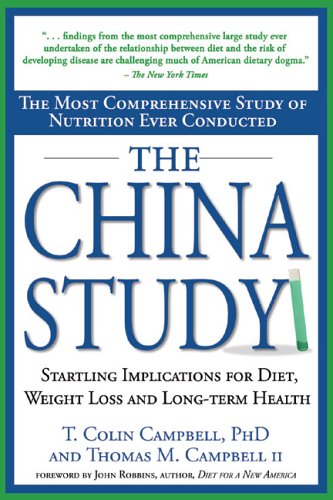
The China Study: More Vegan Nonsense! | AnthonyColpo

Posted on 19:22 by Unknown
The China Study: More Vegan Nonsense! | AnthonyColpo

The China Study: More Vegan Nonsense!

Anthony Colpo | Sunday, July 11th, 2010 | Comments Off

This update + original article was originally posted at TheGreatCholesterolCon.com, September 2, 2007

Anthony Colpo,
September 2, 2007.

I have read a lot of truly awful health and diet books in my time, but without question, one of the very worst was The China Study by T. Colin Campbell. Never have I read a book so audaciously misleading, one whose author pontificates so vigorously about the importance of the scientific method but then unabashedly proceeds to write page after page of scientifically untenable garbage [Anthony's note, July 11, 2010: since penning this in 2007, Dr. Michael Eades, co-author of Protein Power, has emerged as a strong contender against Campbell for the title of biggest BSer in the diet industry. Like Campbell, Eades' ability to spout misleading, self contradictory nonsense is boundless].

I read Campbell’s The China Study in early 2006. Given my extremely low tolerance for BS, it was a painful endeavor, but I soldiered through, shaking my head in both amazement and disgust the whole time. After I finished the book, I proceeded to place a lengthy critique of it on May 17, 2006 at my old web site, TheOmnivore.com.

This critique was extremely well received by readers. In fact, one reader was so enamored with it he decided to reprint the entire article in the reviews section on Amazon’s listing page for Campbell’s book. This reader posted the review under the nickname’JayY’; there was no mention of myself as the author of the article (more about this in a minute).

I was not the first writer to lambast Campbell’s book. Several others had already done so, including a Weston A. Price Foundation member by the name of Chris Masterjohn.

Recently, I was alerted to a ‘rebuttal‘ by T. Colin Campbell at a web site called VegSource.com, in which he attacked the reviews of both Masterjohn and ‘JayY’. Of course, when attacking the latter, he was actually attacking yours truly.

Campbell devotes most of his rebuttal to what essentially amounts to an ad hominem attack on Masterjohn, deriding both Masterjohn and the Weston A. Price Foundation to which he belongs. As for my review, incorrectly attributed to JayY, here’s what Campbell had to say:

“Then there is the anonymous and enigmatic ‘JayY’ who is vigorously submitting a Masterjohn/Fallon look-alike commentary to counter many of the positive reviews on Amazon.com. He says, “I’ve never sat on a government advisory panel, never attended even a single university lecture, and cannot yet boast of having the same volume of published literature as Campbell, but I’m smart enough to know most of the claims made in his book are utter rubbish.” Oh, that all of us might be so fortunate! I can’t help but wonder whether he is advocating the abolition of universities for, in his case, he became unusually intelligent without such training! Further on, he adds, “Within minutes of beginning his book, even the dullest reader will quickly realize that Campbell is on a zealous mission against animal protein, which he believes to be public health enemy number one.” No, this is not my choice for public enemy number one. Rather, I am now wondering whether overzealous, arrogant but untrained critics are a more serious threat.”

In response to Campbell’s rantings, Masterjohn has written a 3,500 word counter-response. I say good luck to Masterjohn, but personally, I won’t be wasting my time crafting such a lengthy rebuttal, and here’s why:

Campbell has not refuted a single point I made in my article. Not one.

Instead, he makes some lame cheap shot about my review being a Masterjohn/Fallon “look-alike commentary”. If Campbell had actually read the various reviews he would have noticed that my review is anything but a rehash of what had already been written – I raised several points that others hadn’t. Of course, given the extremely questionable research skills already displayed by Campbell, his comment comes as little surprise.

He then proceeds with some rather impotent remarks that also do nothing whatsoever to explain why he wrote the misleading rot that comprises so much of The China Study.

  • Why did Campbell repeatedly claim in his book that The China Study demonstrates the value of a low-protein, low-animal fat diet when the actual data from the study show absolutely no such thing?Campbell evidently wishes to re-write history, as much of his rebuttal is dedicated to backing away from his earlier overriding claims. However, the claims he makes for the China Study are there for all to see in his own book. For example, on page 7, he writes that data from the China Study showed that:

    “People who ate the most animal-based foods got the most chronic disease. . . . People who ate the most plant-based foods were the healthiest and tended to avoid chronic disease.”

    Again, Campbell wrote that – not me. If he is now upset that people are citing something he himself said, then he shouldn’t have said it in the first place.

  • Why does Campbell dump on protein incessantly but fail to mention the research demonstrating the great potential value of whey protein? If he is the protein expert he repeatedly portrays himself to be, he should be well aware of this research.
  • Why did Campbell claim that Dr Lester Morrison’s successful heart disease trial showed the value of a low-protein diet, when the participants did not eat a low-protein diet? Morrison himself described it as a high-protein diet!
  • Why did Campbell claim that “There are virtually no nutrients in animal-based foods that are not better provided by plants.”? As my article clearly explains, this claim is so absurd as to be laughable.

Campbell’s response to these claims is…no response. He appears to be lost for words; except of course, when it comes to personally belittling the qualifications of Masterjohn and myself.

You know, I’m all for a good scorch when the person truly deserves it, and have been known to let loose with a bit of unbridled flaming myself on occasion. But when people cannot justify their venom with actual scientific facts, then what they are really telling the world is that they have no answer for the criticisms. If all you can do is attempt to shoot the messenger, instead of explaining in a clear and concise manner just why his message is wrong, then your game is truly transparent, at least to those with any meaningful degree of intelligence and perceptiveness.

For Campbell’s edification, I am in possession of the most important qualification of all: A fully functioning, objective, reasoning brain. It is this qualification, not years of struggling to stay awake during university lectures filled with questionable content, that allows me to see straight through the writings of folks like Campbell.

I will make some quick comments, then reprint my original critique. I wholeheartedly urge readers to read my review, then read Campbell’s attempted rebuttal. Readers can then decide for themselves who is basing their argument on solid science, and who is relying on fantasy-based dogma.

Campbell’s Latest Claims

Campbell writes: “I can’t help but wonder whether he is advocating the abolition of universities for, in his case, he became unusually intelligent without such training!”

No, I’m not calling for the abolishment of universities, and never have. However, I would dearly love to see our current farce of an education system overhauled so that there is a much greater emphasis on developing the essential cognitive skills of reason, logic, and objective analysis. If this were to happen, then people would be far less likely to be duped in the first instance by the kind of scientifically untenable bollocks found in books like The China Study.

Despite sledging protein at every possible opportunity in his book, Campbell now complains that:

“[protein] is not my choice for public enemy number one. Rather, I am now wondering whether overzealous, arrogant but untrained critics are a more serious threat.”

In other words, Campbell doesn’t really consider protein as public enemy number one – that status is now reserved for people who are capable of highlighting just how misleading his writings really are!

Campbell further claims that Masterjohn and I demonstrated “a serious lack of understanding not only of the fundamentals of scientific research but also of the principles of statistics, epidemiology and nutrition,” by “superficially citing uncorrected crude correlations” in order “to reflect an alternative agenda or bias that has nothing to do with objective science.”

This, coming from a guy who has totally misrepresented the data from the original China Study monograph to make erroneous claim after claim in his popular book version.

Campbell whines that Masterjohn and I used “uncorrected crude correlations”, but he was more than happy to cite these correlations in his own book. I guess the use of these uncorrected correlations becomes unacceptable only when others use them to destroy his untenable claims.

By the way, if Campbell had corrected correlations available, then where the heck were they? If they were publicly available I would have been more than happy to use them. However, neither Campbell’s book, the original China Study monograph, nor his rebuttal contain any such ‘corrected’ correlations.

As for casting aspersions on my motives, Campbell might be able to dubiously use the Weston A. Price Foundation angle against Masterjohn, but it won’t work against me. After all, I am not and never have been a member of the Weston A. Price Foundation, nor any other ‘foundation’, ‘institute’, or ‘organization’. Being a staunchly independent individual, I have a strong aversion to joining such organizations – in my observation, they tend to encourage the phenomenon of groupthink. In order to fit in and be accepted by the group, individuals start thinking, talking and acting like the group. Explicitly or implicitly, any behavior or expression of ideas that runs contrary to the cherished dogma of the group is often frowned upon.

For a few years I was involved with a group called THINCS, which is not an official organization (non-profit, business or otherwise) but simply a loosely affiliated network of researchers, medical practitioners, and science writers who share a common skepticism of the reigning cholesterol paradigm of heart disease. However, earlier this year I wrote to the network’s founder Uffe Ravnskov and asked for any indication of me as a member to be removed from the THINCS web site. I have the utmost respect for Uffe Ravnskov, but simply do not wish to be a ‘member’ of any group or organization that could be perceived as pushing a certain ideology.

The bottom line is that I think for myself, do my own research, and come to my own conclusions. Period.

And try as they might, despite my lack of formal education qualifications, no-one has ever provided anything resembling an effective, scientifically-based refutation of my contentions regarding the cholesterol/saturated fat paradigm or weight loss.

Anyway, I’ve said enough. I’ll now let my original review of The China Study and Campbell’s attempted rebuttal speak for themselves.

Thank you.

Read More
Posted in name - Anthony Colpo | No comments

Why Multiple Sets are Superior, Declining Omega-3 intakes, and the Proper Way to Do Lat Pulldowns | AnthonyColpo

Posted on 18:54 by Unknown
Research Updates: Why Multiple Sets are Superior, Declining Omega-3 intakes, and the Proper Way to Do Lat Pulldowns | AnthonyColpo

Why 3 Sets of an Exercise are Better than 1, and Why 5 Sets are (Probably) Better than 3

While still enthusiastically promoted in some circles, single-set weight training routines have repeatedly been shown to produce inferior results to multiple set routines. A recent review of the research by James Krieger, published in the Journal of Strength and Conditioning Research, found that 2 to 3 sets per exercise are associated with 46% greater strength gains than 1 set, in both trained and untrained subjects[1].

The effect of even higher numbers of sets is unclear; 4–6 sets resulted in only 13% greater gains than 2–3 sets, but this figure was derived from limited data[2]. Exercise scientists, like society in general, seem to be enamoured by the number 3 (who ever heard of the Four Stooges, the Four Wise Men, four-day growth, or ménage à quatre?) with most studies comparing single-set protocols with three-set routines. A mere 2 studies included in the review incorporated 4 or more sets per exercise.

Which leaves those of us who’d like to see some bona fide scientific support for higher-set protocols, like the old time-honoured standby 5 x 5 routine, in a bit of a pickle.

So in order to shed further light on this issue, Terzis and colleagues decided to venture down to the molecular level to see if manipulating the number of sets had any impact upon anabolic processes in muscle cells[3].

Resistance exercise evokes acute increases in the activation of a nifty little protein known as the mammalian target of rapamycin (mTOR) and its downstream targets p70S6 kinase (p70S6k) and the ribosomal protein S6, which are thought to regulate initiation of the translation of skeletal muscle protein. Moreover, the acute increase in the phosphorylation of p70S6k following an initial bout of resistance training is closely correlated with the increase in human skeletal muscle mass after a few months of weight training.

For those who just read that last paragraph, scratched their heads, and muttered “what the hell does that mean, Colpo?!”, here’s the simplified translation: Weight training ramps up the activity of mTOR, p70S6k and ribosomal protein S6, which may in turn increase muscle growth and strength. Because most people lift weights to gain muscle and strength, this is a good thing.

So to determine if the number of sets during a workout had any effect on mTOR, p70S6k, ribosomal protein S6 and a bunch of other signalling proteins with hard-to-pronounce names, Terzis and his team convinced eight untrained males to visit their laboratory – not once, but three times. This wasn’t your usual lab – along with test tubes, scalpels, and rodents stressing over their longevity prospects, it was equipped with a leg press machine.

On separate occasions, and in random order, the subjects performed one, three and five sets of 6 repetition maximum (RM) on the leg pres. Muscle biopsies were taken from the vastus lateralis muscle in the thigh both prior to and 30 minutes after each training session.

Now to explain the results, I’m going to have to use some big words again, so bear with me here. Phosphorylation of Akt was not altered significantly after any of the training protocols, whereas that of the mammalian target of rapamycin was enhanced to a similar extent by all three training volumes. The phosphorylation of p70S6k was elevated threefold after 3 x 6 RM and sixfold after 5 x 6 RM, while the phosphorylation of S6 was increased 30- and 55-fold following the 3 x 6 RM and 5 x 6 RM exercises, respectively.

These findings indicate that when resistance exercise is performed, at least in a fasted state as in this study, the increase in phosphorylation of signaling molecules such as p70S6k and the S6 ribosomal protein in human muscle depends on the exercise volume. If these differences in signalling protein activity translate to real life differences in muscle growth, then it could help explain why 3 set routines consistently outperform single-set routines in clinical studies and why 5-set routines such as the classic 5 x 5 have garnered such a loyal following, despite a distinct lack of self-aggrandizing, multi-millionaire, mustachioed magazine publishers or vocal chain-smoking, Ayn Rand-quoting ex-bodybuilding champs to aggressively promote its virtues (just like the Four Stooges, I bet you never heard of the Weider 5 x 5 Principle, huh?).

Practical application: If you’re after maximal muscle and strength development, 3 sets is better than 1, and 5 sets is quite possibly better than 3. Am I a genius at interpreting this stuff, or what?

Read More
Posted in training - sets | No comments

Friday, 7 October 2011

How to Train like a Hunter-Gatherer by James O'Keefe, MD

Posted on 15:57 by Unknown
How to Train like a Hunter-Gatherer by James O'Keefe, MD
View more presentations from Ancestry
Read More
Posted in training - paleo | No comments

Saturday, 24 September 2011

Fasted exercise - Matt Metzgar

Posted on 15:12 by Unknown
Matt Metzgar

Fasted exercise - Matt MetzgarSeptember 18, 2011

Running on Empty

I've noticed a couple curious things lately in regard to eating and exercise. First, I've noticed that if I ocassionally skip dinner, or just have some carbs like potatoes but no meat for dinner, that I actually feel better upon waking the next morning. Of course, I'm not doing this every day, but if I do this once or twice a week, then I am virtually guaranteed to feel better the next morning. This points to how occassionally restricting calories in the evening, or perhaps restricting protein in the evening seems to yield benefits.

Today, I noticed how this carried over into exercise. I have been exercising fasted in the morning, going for an intermittent run on the nearby trail. Last night, I just had some potatoes instead of dinner, and this morning I ran before eating anything. This combination seemed to really prime my body for running. I don't know if it put me in "fat-burning" mode or something, but I was just really cruising on the trails today.

It's amazing how good you can run on an empty fuel tank. I wish someone would have told me about this 15 years ago. I remember reading Runner's World for a few years straight back in my twenties. Never once did I see an article that recommended running while fasted. Guess it wasn't the expert publication it was supposed to be!
Read More
Posted in name - Matt Metzgar, training - fasted | No comments

Wednesday, 14 September 2011

A self help guide to beating tennis elbow

Posted on 16:01 by Unknown
Articles
A self help guide to beating tennis elbow

Imagine this scenario (it probably applies to most of us!)...

A while ago you may have hurt a muscle, or been in a stressful situation for a bit too long. Your muscles tensed up in an automatic protective response to limit range of movement (ROM) so as to prevent further injury. To free up your conscious mind, your sub-conscious mind took over the job of maintaining the tension. Some time has passed, the injury has healed, and the need for the ROM limiting tension is no longer there. You try to relax the muscle to stretch it, but because the sub-conscious mind is still fighting against you to restrict ROM, it hurts. The sub-conscious mind wins, and another "stiff muscle" develops as we get older. Its now time to re-program the sub-conscious mind to let go the tension, but this can be very difficult because most people don't know it needs to be done, let alone how to do it!

Re-programming the sub-conscious mind is a bit like self hypnosis. Before you can send a message to your sub-conscious mind to re-program it, you have to believe it first! You have to genuinely believe that its not going to hurt if you relax and let that muscle stretch - and that's hard to do if its got a recent history of hurting every time. The best way to stretch tight muscles is to take the time to totally relax first, using as many techniques at your disposal as necessary. Wear loose, warm clothing. Warm up the muscles before stretching with heat or exercise. Get as comfortable as possible, with soft padded support under all areas subject to local pressure forces - the sofa could be ideal. You need a relaxing environment with no interruptions. Think relaxing thoughts - relaxing music or relaxation tapes can be useful.

All this leads up to the most important point I have saved for last - consciously relax when stretching (breathing out helps) to release all tension and pain. If you are conscious of the possibility of overstretching, you will probably subconsciously tense up, so make sure your muscles are fully supported to prevent overstretching - preferably with soft firm padding. Also make sure that you have no unpleasant pain (sometimes a mild "stretch pain" can feel good and this is ok). The ROM of your stretch should not exceed your pain threshold if you want to successfully re-program your sub-conscious mind into "permanently" releasing the protective spasm.

Use the "contract-relax" method of stretching (described below) - it is probably the most efficient and effective method developed to date.

All muscles, particularly those that are damaged, should be protected from excessive overload at all times. In some cases, support systems such as braces may be appropriate.

Stretching and strengthening exercises can be a useful part of the rehabilitation process because controlled loading improves collagen alignment of the tendon and stimulates collagen cross-linkage formation, which improves tensile strength. It is important that the state of the muscle/tendon injury is given due consideration when prescribing the loading forces. The exercises should focus on improving the flexibility, strength, power and endurance of the entire muscle-tendon unit. The duration of this program would generally be at least 12 weeks.

Before starting any specific forearm exercises it recommended to loosen up the neck, shoulders, upper back and chest muscles with a hot shower or bath, followed by a few stretching exercises. After that, it is beneficial to heat the most problematic area (probably the wrist extensor muscles in the elbow region) before stretching, to improve its ability to stretch. Heat to 390 C to 430 C - the warmer the better. For best results follow up with tissue cooling prior to stretch release on the last passive stretch. Cooling the muscle to normal temperatures (370 C or less) before releasing the tension allows the passive stretch to be held longer and apparently allows the collagenous microstructure to restabilise in its new stretched length.

Check with your therapist to make sure you are ready for these stretching or strengthening exercises.

The exercises described below should be done carefully and are based on the well established principle of progressive overload to gradually improve both strength and flexibility. As a rule of thumb, don't exceed pain-free muscle loading or stretching by more than 5%. In other words, slowly stretch further (or push harder) until extremely slight pain is felt, then go a comfortable small margin past this point. These pain levels should not be unpleasant. If your injury is substantial, expect the flexibility and strength to be low, and the appropriate amount of "overload" will also be small. Progress will be slow and patience is required.

Stretching the wrist extensor group using the widely used "contract-relax" method provides the benefit of also strengthening the extensor muscles and the damaged extensor group tendon. A typical exercise is shown in the first photograph below for a right arm injury. First gently stretch the extensor group with the method as shown below - note that your range of movement will probably be less than that shown in the photograph if you are injured. Notice that the hand has also been rotated so the little finger approaches horizontal - this also stretches the elbow supinator muscle which is commonly involved in tennis elbow injuries. Hold the stretch position for about 30 seconds or 5 slow breaths. Next (while breathing out slowly through the nose) push carefully with a very light effort for about 5 seconds with the back of the right hand against the left hand, which is held steady. After that slowly breathe in through the nose, then breathe out slowly through the mouth and at the same time gently stretch a little further (try to relax and release any tension). Hold for one slow breath cycle, then repeat the procedure two more times. Unless you have overdone the stretch, you should be able to hold the last stretch position for 30 seconds or 5 slow breaths. I like to finish off with a slow "yawn stretch" to further accentuate the stretch, using the antagonist muscles to create the additional movement (reciprocal inhibition). Repeat the exercises twice a week. Allow about 3 days rest between exercise sessions.

A strengthening exercise for the wrist flexor group is shown in the next two photographs. Push from position 1 to position 2, with the left hand providing a resistance force which allows a pain free movement. The right hand would be typically pressing with approximately 20 to 30 percent of full strength, but this could be significantly less for more severe injuries. The number of repetitions would also vary with the severity of the injury, but would typically be one to three sets of 6 repetitions, building to 12 repetitions, done twice a week. Allow about 3 days rest between exercises. Using position 1, the contract-relax method can be used as described earlier for the wrist extensor group to provide a stretching exercise for the wrist flexor group. This exercise can be useful for carpal tunnel injuries. A more comprehensive set of exercises for the arm and hand, and a method of doing them can be seen in an excellent book by Kit Laughlin, see reference 2 below.

Stretch for extensor tendon Strengthening - position 1 Strengthening - position 2

References

  1. Hammer, W: On Stretching. Dynamic Chiropractic February 12, 1993, Volume 11, Issue 04
  2. Laughlin, K: Overcome Neck & Back Pain, Edition 4. Simon & Schuster, 2006

Return to top of page

Read More
Posted in injury - tennis elbow, tennis elbow | No comments
Newer Posts Older Posts Home
Subscribe to: Posts (Atom)

Popular Posts

  • 54 year old George Hood Sets Guinness World Record in Abdominal Plank-Dec. 3, 2011
    Uploaded on Dec 6, 2011 For more background about George Hood and his remarkable accomplishment, see http://www.insideedgepr.co...
  • SUPER human strength - Calisthenics Professionals
    Uploaded by OfficialBarstarzz on Nov 22, 2011   Barstarzz is a team of Calisthenics Professionals giving you the inspiration ...
  • Taekwondo Kicking & Training - with Bob
    Loop Start playing when buffered ( Only Notify ) - % Smart Buffer Estimated Time: Will start buffering when initialized. Donate to S...
  • How To Deadlift Properly- The Ultimate Guide
  • Kettlebell Experiment - Bring One To Life For $10.
    Bodybuilding.com - Tim Ferriss: Superhuman - The Kettlebell Experiment - Bring One To Life For $10. Build your own Kettlebell with o...
  • Of Whooshes and Squishy Fat | BodyRecomposition - The Home of Lyle McDonald
    Of Whooshes and Squishy Fat | BodyRecomposition - The Home of Lyle McDonald A few weeks back I answered a question about Not Losing Fat at a...
  • The Sherrington Law of Irradiation - Increase Your Body Strength
    The Sherrington Law of Irradiation Pavel Tsatsouline is a bad ass commy bastard. Actually, he’s a turn-coat capitalist pig now, but that’s ...
  • Shaolin Yi Jin Jing Muscle & Tendon Changing Classic - YouTube
    Uploaded on 12 Feb 2009 "The basic purpose of Yijinjing is to turn flaccid and frail sinews and tendons into strong and st...
  • High intensity exercise for 6 minutes a week - how to lose weight and prevent diabetes
    High intensity exercise for 6 minutes a week - how to lose weight and prevent diabetes December 13, 2010 in Diabesity | 38 comments   Pr...
  • The Physicist's Guide to fat loss - The Carb Nite Solution
    Book review: The Carb Nite Solution: The Physicist's Guide to Power Dieting (Paperback) Extract : "Carb Nite Solution an exc...

Categories

  • - library resources
  • air squats
  • carb - cycling
  • carbohydrates
  • disease - metabolic syndrome
  • earthing
  • exercise - abs
  • exercise - aerobic
  • exercise - bodyweight
  • exercise - cardio myth
  • exercise - heart disease
  • exercise - pull up
  • exercise - push up
  • exercise - reps
  • fasting - intermittent
  • fat - body
  • fat - dietary
  • fat - reduction
  • heart disease
  • hindu squats
  • injury - tendonitis
  • injury - tennis elbow
  • kettlebell
  • name - Alan Aragon
  • name - Anthony Colpo
  • name - Borge Fagerli
  • name - Doug Miller
  • name - Dr Doug McGuff
  • name - Dr Jeffry Life
  • name - Dr Kurt Harris
  • name - James Krieger
  • name - Lyle McDonald
  • name - Mark Sisson
  • name - Martin Berkham
  • name - Matt Metzgar
  • physiology - muscle
  • running - barefoot
  • running - paleo
  • running - sprinting
  • sitting too much
  • snow training
  • tennis elbow
  • training - fasted
  • training - HIT
  • training - natural
  • training - paleo
  • training - sets

Blog Archive

  • ▼  2014 (48)
    • ▼  July (13)
      • Taekwondo Kicking & Training - with Bob
      • Taekwondo Spiderman | Flips & Kicks
      • Suitcase Deadlift - Steve Maxwell
      • 20 Myths About Six Pack Abs | Find out the truth a...
      • ▶ infimetricdemo vid.wmv - YouTube
      • Best Detransformations In Bodybuilding |IronGangst...
      • One minute up, one minute down Chin Up - Vee's Hig...
      • Bodysaw- Anti Extension Core Training
      • Standing on the Stability Ball (Swiss Ball) - Bala...
      • Bodybuilding and Kefir Part 1 & 2
      • Are You Jerking Off In The Gym? Captain Power's Un...
      • 20 Ways To Boost Nitric Oxide Naturally » Increase...
      • Intensity and Time Under Load - Reps, Sets and the...
    • ►  May (2)
    • ►  April (8)
    • ►  March (12)
    • ►  February (10)
    • ►  January (3)
  • ►  2013 (225)
    • ►  December (2)
    • ►  October (2)
    • ►  September (21)
    • ►  August (16)
    • ►  June (16)
    • ►  May (66)
    • ►  April (18)
    • ►  March (41)
    • ►  February (37)
    • ►  January (6)
  • ►  2012 (87)
    • ►  December (12)
    • ►  November (2)
    • ►  October (1)
    • ►  September (7)
    • ►  August (3)
    • ►  July (14)
    • ►  June (7)
    • ►  May (3)
    • ►  April (21)
    • ►  March (10)
    • ►  February (5)
    • ►  January (2)
  • ►  2011 (45)
    • ►  November (6)
    • ►  October (3)
    • ►  September (2)
    • ►  August (11)
    • ►  July (13)
    • ►  June (10)
Powered by Blogger.

About Me

Unknown
View my complete profile